Featured
Table of Contents
Digital marketing in 2026 focuses greatly on how machines interpret human intent. The shift from basic keyword matching to semantic understanding has changed the method content relocations throughout the web. Modern circulation no longer counts on simply publishing a link and hoping for clicks. Instead, it involves a complicated system of material intelligence that guarantees details reaches the best entities at the correct time. For businesses operating in New York, the competition for visibility in generative search results page requires an approach structured data and entity-based optimization.
The Evolution of Semantic Browse and Material Intelligence in 2026
The present year has actually seen a significant shift in how online search engine, or rather generative engines, procedure info. Knowledge graphs now prioritize the relationships in between principles rather than the frequency of specific words. This modification indicates that content distribution needs to be handled with a deep understanding of how subjects connect. When info is syndicated, it carries metadata that defines its relationship to other nodes in a digital knowledge base. This is particularly appropriate for business investing in high-level search strategies within the regional market.
Success in this environment depends upon how well a piece of content answers the specific needs of a user's intent. Expert System Search Optimization (AEO) and Generative Engine Optimization (GEO) have actually changed standard approaches. These techniques concentrate on offering clear, authoritative answers that AI models can quickly consume and mention. Content intelligence tools now evaluate existing data to anticipate which subjects will acquire traction, enabling brand names to disperse info before a pattern even peaks.

Recent data shows that need for Marketing News continues to grow amongst mid-sized firms seeking to establish authority. By focusing on semantic relevance, these companies guarantee their material appears not just in basic search results, however as the main source for AI-generated summaries. This technique counts on a technical backbone that focuses on clean code, fast load times, and clear schema markup.
Syndication Strategies for New York
Syndication in 2026 has to do with more than simply republishing content on third-party websites. It includes a strategic partnership between the original developer and the host platform to maintain the "source of fact" status. Steve Morris, CEO of a prominent company with offices in Denver, Chicago, and New York City, has often talked about the value of maintaining content integrity during the syndication procedure. When content is spread across various channels, it should stay tied to the initial entity to prevent dilution of search authority.
For a business located in the surrounding territory, local syndication can be an effective tool for constructing importance. Dispersing expert commentary to local news outlets or industry-specific blog sites helps signal to search engines that the company is an essential player because particular geography. This regional relevance is a major factor in how RankOS and comparable platforms determine visibility ratings. These systems look for consistent points out of an entity throughout numerous high-authority platforms to validate its status as a leader in its respective region.
Many companies discover that Top Martech News Updates supplies the necessary presence for long-lasting development. This involves recognizing platforms that share a similar semantic profile. If a brand blogs about ecommerce, its syndicated content ought to appear on sites that online search engine already connect with retail and digital trade. This alignment strengthens the semantic bond in between the brand and its core service area.
Technical Requirements for AI-Driven Distribution
The technical side of content circulation has actually ended up being more demanding. Browse engines now use sophisticated spiders that search for more than simply text. They examine the structure of the data, the existence of particular identifiers, and the historical performance of the publishing domain. Material needs to be optimized for both human readers and maker customers. This dual-purpose writing is a hallmark of contemporary digital growth efforts.

In 2026, making use of RankOS has allowed organizations to track their visibility in real-time throughout generative engines. This platform supplies insights into how AI models are categorizing a brand's content. If the circulation method is working, the brand name will see its name appearing in more AI citations and "advised" obstructs. Business searching for Marketing News for Technology frequently focus on data-driven distribution models to remain ahead of these algorithmic shifts.
An essential part of this technical requirement is guaranteeing that all syndicated variations of a piece of material point back to the original using canonical tags. However, in the world of GEO, canonicalization is simply the primary step. One should likewise guarantee that the content is structured in a method that AI designs can quickly parse. This includes using bulleted lists, clear headings, and succinct summaries that offer instant value. These aspects make the content "snackable" for AI, increasing the probability of it being utilized as a referral point in the United States.
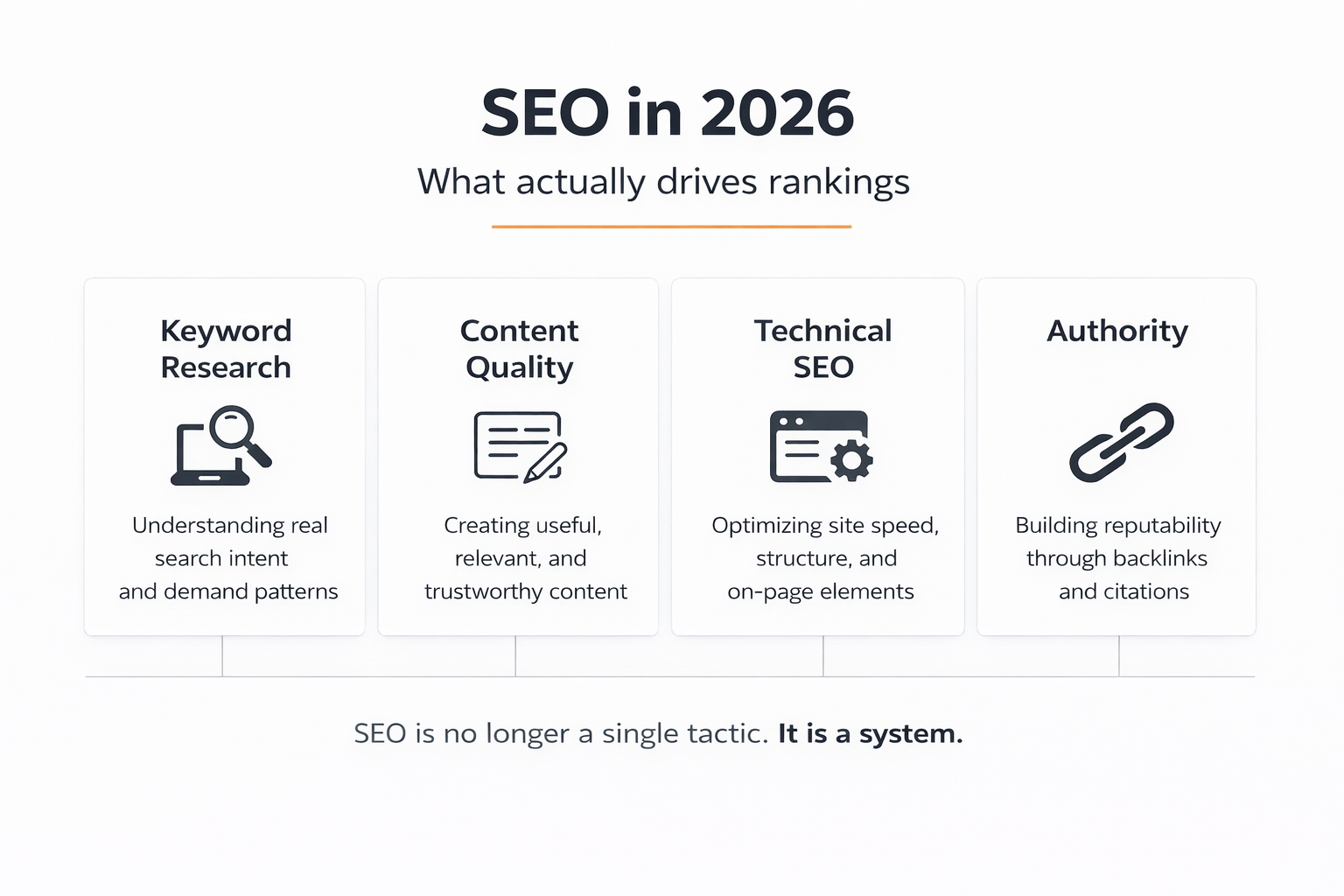
The Role of Authority and Brand Name Trust
Authority has actually become the main currency of the digital world. With the increase of AI-generated content, online search engine are putting a premium on info that comes from verified, human-led sources. This is where the reputation of an agency and its leadership ends up being an aspect. Steve Morris and his team at the agency, which operates out of major hubs like Dallas, Atlanta, and LA, emphasize that material should have a clear point of view and provide distinct insights that can not be replicated by fundamental algorithms.
Circulation ought to concentrate on high-trust environments. Getting a piece of content published on a respected market site is worth more than a hundred posts on low-quality link farms. This concentrate on quality over amount is a direct outcome of how semantic search has actually evolved. Engines are now wise adequate to acknowledge when a brand is attempting to "game" the system through mass syndication. Rather, they reward those who contribute important information to the global understanding base.
Keeping an eye on the performance of these efforts requires advanced analytics. It is no longer sufficient to track page views or clicks. Marketing teams should now look at "reference share" and "citation frequency" within generative AI actions. These metrics provide a more accurate photo of how a brand name is viewed in the digital sphere. Whether the focus is on Miami, Nashville, or the more comprehensive North American market, the objective remains the exact same: to be the most relied on source of details in a given specific niche.
Future-Proofing Content for the Late 2020s
As 2026 advances, the line between content production and content circulation continues to blur. The most successful strategies are those that consider distribution at the very start of the creative process. This implies composing with specific entities in mind and comprehending how a piece of material suits the larger discussion of its industry. Making use of material intelligence tools to recognize spaces in existing understanding enables brand names to develop extremely targeted product that is almost guaranteed to be gotten by syndication partners.
The environment will only end up being more competitive as more businesses adopt AI-driven optimization. Remaining ahead needs a dedication to technical quality and a deep understanding of semantic relationships. Organizations that disregard these shifts will find themselves unnoticeable in a world where AI functions as the main entrance to info. On the other hand, those who master the art of distribution and syndication through the lens of content intelligence will find themselves at the center of the digital discussion for many years to come.

Latest Posts
Is Your Brand Ready for Modern PR?
How to Build Resilient Brand Strategy for 2026
PR Versus SEO: Winning Strategies for 2026